Sunday, March 8, 2020

International Women's Day 2020 and My Feminist Journey

                         Image result for clara zetkin

I first started getting interested in feminism when I was around sixteen. I was never particularly political, in fact I made a point to actively avoid politics at this time. I didn’t think that any politician truly represented who I was, or my experiences being a working class girl. My friends and family weren’t political either, so I didn’t really have anyone to help guide me through this time.  When I first heard about feminism, it was liberal feminism that I swayed towards.  It dominated the media, messages of girl power and how we need more female CEOs, and in my young age I believed in that. I believed that if the laws were changed, women would be equal to men and therefore our liberation was in the hands of the lawmakers. Emma Watson, the English actress turned liberal feminist sweetheart, was my biggest inspiration in my early years, with the He for She campaign illustrating that feminism was for everyone, including men. But liberal feminism does nothing for the working-class women, the women around the world who are beaten, raped, and killed by men. This useless ideology tries to view liberation as an individual matter, if it is ‘empowering’ to you, if you enjoy it, then it’s feminist. Putting on makeup became a ‘feminist’ action, taking your clothes off for men became ‘empowering’ because they are paying you. I began to realise very quickly in the first few years of educating myself that this was not a movement I wanted to be a part of, I was not proud of this movement, and it had nothing to offer me. 

As I got older and started reading more feminist theory, I began to think about all the times that I had been harassed, assaulted and targeted by men. Throughout my childhood and my teenage years, I had been hurt by men too many times to count. I wanted to understand why they felt that they could hurt me like this whilst facing zero repercussions for their actions. I started getting into radical feminism, the more ‘hardcore’ feminism, and the basis for most of the insults geared  towards feminist women. All the women who rejected capitalist beauty ideals, who wanted to abolish domestic violence, porn culture, femicide and prostitution were in this community. I began to understand that our society was male-dominated, and no matter how many laws were changed, it would always remain this way unless there was a complete overhaul of the current system.  

Radical feminists have the correct line on many of the issues that I care about – and a lot of radical feminists that I have spoken to have a class analysis of how these issues effect women, with working class women being at the bottom of the hierarchy. But I also seen a lot of radical feminists aligning their politics with centrist and right wing  political candidates. From the support of Margret Thatcher in Britain to Hillary Clinton in America, it was clear that I couldn’t align my politics with these women. Many radical feminist women who rejoined the Labour Party to support Jess Phillips in her leadership campaign quickly switched their preference to Keir Starmer after she dropped out of the race. It is clear that many of these women are happy to drop working-class women at the drop of a hat, even though Starmer’s opinions on gender match others who are running for leader.  

I am sympathetic to a lot of radical feminist ideas, and some of my favourite feminist theory has been written by radical feminists – Catharine Mackinnon, Andrea Dworkin and Kate Millett, to name a few, have been influential in the movement and we mustn’t forget their pioneering work. But I felt that radical feminism was lacking something, and it was clear I still had a lot of developing to do. 


To me, a class analysis must always be at heart, even when talking about women’s issues. Learning about the communist movements throughout the world and how they platformed working class women will stay with me forever. Having a material analysis in everything that makes up society has shaped my politics and my positions on several issues. Many self-proclaimed Marxists have the complete wrong view on things such as porn and prostitution, gender and surrogacy, and the movement has to address that. We cannot continue to promote feminism whilst simultaneously working against half of the working class. Alexandra Kollontai’s words still ring true today: “Alexandra Kollontai’s words still ring true today: “For what reason, then, should the woman worker seek a union with the bourgeois feminists? Who, in actual fact, would stand to gain in the event of such an alliance? Certainly not the woman worker.” All women experience misogyny throughout their lives, however, working class women are those most powerless against a capitalist society which promotes patriarchy.  

 If we are to truly eradicate capitalism, we have to eradicate everything which keeps women down. The left also has to get over the current trend of identity politics and the idea of ‘oppression Olympics’ which benefit no one. We are tearing ourselves, and the movement, apart. We should unite based on our common struggle to defeat the cause of our oppression. This liberal attitude is divisive, and below communists to de-platform and attack women for talking about sex-based oppression. The left has to work on itself before the movement can make any difference to the lives of those who need it most. 

                              Image result for soviet union women 

Being a Marxist feminist has not always been easy. I’ve had anonymous faces behind computer screens calling me a terf, a misogynist, a scumbag, and I have received threats of violence, rape and death for speaking my opinion. The world has never been a good place for women to exist, and the toxic environment of social media is the same. I’ve took enough breaks from social media to escape this constant fighting, but I will never apologise for standing up for myself, for my sisters, or for any woman.  

I couldn’t write this article without mentioning my sister and comrades from the Young Communist League. At the time of writing this, I am just home from our International Women’s Day event, where I laughed and cried whilst listening to their speeches. Listening to the history of women in the communist movement had me inspired. Listening to the anecdotal experience of what it is like to be a female communist was incredibly relatable and emotional. Listening to a female trade union organiser had me strategising on where we should go moving forward.  These women have helped me develop into the communist that I am today, and I am forever grateful to be a part of a party which is as supportive as the CPB.  

Friday, December 13, 2019

Onwards Comrades, We Have a World to Win

Image result for labour party


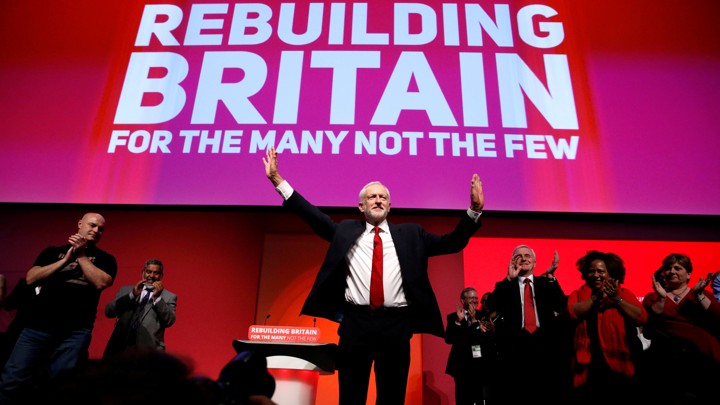
For everyone on the left who have supported Corbyn’s Labour Party throughout the years, for the socialists and activists who have been tirelessly campaigning for the party, for the trade unionists who have been organising the working class, this election result was devastating.

Honestly, it feels like a bad dream. To have had one of the most people-centred and people-led campaigns do so badly in an election is heart breaking. 

However, today has not been a day of complete mourning for the working-class movement. It has been a day to think critically, assess where we went wrong, and try again. We continue to organise, we continue to fight, and we will win.

The Young Communist League in Britain and the Connolly Youth Movement in Ireland have seen a huge increase in applications. Across the two islands, young people are angry with the result, angry with their class being cast aside, and are ready to rebuild the movement.

Socialist movements are not built in a day, and the liberation of the working class will not be granted to us out of the generosity of an elected government.

But a left-led Labour Party are not the enemy here. The enemy has been, and always will be, the capitalist class. The rich and the right wing who take everything we have and leave us with the crumbs.

We organise, we fight, and we win.

Our demands most moderate are, we only want the Earth.

Saturday, August 17, 2019

Lifting the Tumblr Porn-Ban Will Hurt Children the Most


                    Image result for teenager on social media stock image

Tumblr has recently been bought over by Automattic Inc., who owns the website WordPress. However, a niche community of users are requesting that Automattic Inc. reverse the pornography ban that was placed on the website in December 2018. 

The porn ban has been a relief to many Tumblr users, including myself. Pornography is offensive, misogynistic and tasteless, with a multitude of dedicated websites. As a social network, Tumblr has the responsibility to safeguard it’s users from ‘adult’ content, with a temporary ban being placed on the Tumblr app from Apple’s App Store, after sexual images of children were found on the site. Automattic stated in the Wall Street Journal that Tumblr is “just fun…were not going to change any of that” when announcing that it has no intentions to reverse the porn ban.

However, an article by Vivian Ho for The Guardian tells the stories of people in the LGBT community who feel victimised by the ban. Nyx Serafino, a self-identifying gender-fluid sex worker, states that the porn ban “feels like a big middle finder to women, to sex workers, and to queer kids…it’s like saying ‘we don’t want you here.’” Elsewhere in the article, there is another quote from Serafino, where she claims that “censoring sexuality doesn’t help anyone step toward positivity.” But the LGBT community is not centred around porn, it is centred around their sexual preference and identities, where members of the community have a sense of solidarity with one another. To use the porn ban as a direct attack on the LGBT community is lazy, harmful and completely disrespectful.

The ban removed all adult content included ‘photographs, videos and gifs that depict sex acts or “show real-life human genitals or female-presenting nipples.”’ However, images of female nipples would still be shown in cases of artwork or breastfeeding.

As a Tumblr user for almost ten years, the porn ban came as a huge relief to me. There have been many times where I would be smacked in the face with pornographic images, and sometimes paedophilic content, whilst scrolling through my timeline. Since the ban, I have seen very, very few pornographic images on Tumblr, and I believe that it is the best thing that Tumblr has done.

Whilst pro-porn users state that Tumblr is not a kid’s website (the App Store recommended age is 17+) children have been using Tumblr for years. It is a place where a community of people can come together, especially with fandom communities. To argue that children should not be on social media is pointless, children have been lying about their age to use social media for years, and we have all done it at some point. That does not mean that children should not still be safeguarded from sexual content. Most adult users do not want to see porn on the site, nevermind children. Furthermore, people have to remember that teenagers (especially 16/17-year olds) are still CHILDREN.

The only people who are really impacted are the users who run porn and kink blogs. Tumblr originally had a feature where these users flag their blogs so that they wouldn’t turn up in children’s searches, but this feature was not used by the vast majority. Having a porn or kink blog which can be viewed by children is horrendous, and knowing fine well that children can view this content makes you borderline paedophilic. The ‘DD/LG’ community in particular is full of people who hide behind their ‘kink’ to defend the fact that they are attracted to grown adults dressing and acting like children. A lot of grown men in these communities are also attracted to and have sexual relationships with teenage girls as young as sixteen (depending on the age of consent), and if the age of consent was any younger, it is not too far off to think that they would engage in child rape.

Anyone asking for the porn-ban to be lifted is completely ignoring the safeguarding of children, and to blast sexual content onto the timelines of people who don’t want it. There are various porn sites out there. There are various websites where sexual content is allowed. Do not allow a website which children use to become the site it once was.

Sunday, August 11, 2019

In Response to Antonia Murphy, the "Ethical Pimp"


Just over a month ago, HuffPost posted an article written by Antonia Murphy, a white woman who speaks of having gone to a private school in her youth, who describes herself as an ‘ethical pimp.’ Murphy started her ‘career’ after a divorce which left her alone to look after her daughter and in need of an income, and operates in New Zealand.

When describing how she talks to her child about what she does, she says that she ‘explains it in words she can understand,’ by saying that ‘ladies do dress-up and give kisses and cuddles to men and make lots of money.’ Perhaps a better way to describe her career choice is “running a brothel,” or even better, “mummy exploits young women into having sex with men they don’t know just so they can survive.”

Murphy states that at The Bach, they have a service called the Girlfriend Experience, where the woman is offering the opportunity for vaginal and oral sex, and kissing, as well as “companionship and kindness.” Apparently, The Bach only sells services and a woman’s time. Not women, not sex. She also compares prostitution to being a therapist or a caregiver, however, these professions actually help people and are productive work, and are only exploitative under the capitalist system. Prostitution, however you try to dress it up, is a misogynist practice under any economic system, with predominantly women being beaten, raped, trafficked and killed as a result, either by men who use these services or by their pimps. But Murphy is an ‘ethical’ pimp who runs a "feminist brothel”, she doesn’t exploit poor women in order to make her money. 

First of all, let’s talk a bit about the “clients” of The Bach. All clients mentioned in the article are men who all visit the brothel for different reasons. However, most of the men mentioned are cheating on their wives, with one man thinking that his sex drive is more important than remaining loyal to his wife who suffers from dementia. However, the most dehumanising description of a client is of a man who they call ‘Eric with Autism.’ Eric is a grown man who is described to live with his parents, and once he has saved his disability benefits ‘for weeks,’ his mother drives him to the brothel. To mention this client and describe him the way she did, whether intentionally or not, is to perpetrate the ableist myth that liberal feminists love to mention, that disabled people aren’t able to find someone to have sex with on their own, but they have to pay a prostitute in order to have sexual experiences. To regurgitate this statement in order to justify prostitution is a complete disservice to disabled people and infantilises them whilst arguing that pimps are actually doing disabled people and poor women a favour.

The women who sell these services are all between the age of 18 and 45, with many having children to care for, as well as other jobs. Whilst some of the younger women only take bookings about once a month and are only looking for a “sexy adventure,” Murphy is happy to announce that:

“The Bach has employed dozens of women, helping many of them out of poverty. We easily offer the best-paid job available to young women in our New Zealand town.”

But this is precisely the problem. Prostitution is inherently exploitative as it provides women with a way to stay out of poverty, by selling themselves to men. Whilst struggling to make ends meet, these women are still living in fear that they will be “outed” as prostitutes in their town, even though prostitution is decriminalised in New Zealand. Activists who scream that “sex work is work” ignore the implications that engaging in prostitution have on women. A peer-reviewed study which interviewed 854 prostitutes showed the exact types of violence that these women face, and is shown down below.


Rape, STIs, unwanted pregnancy and violence are all threats that women face in prostitution, even when the country has the Nordic Model in place. Liberal feminists who argue that prostitution is productive work which benefits both parties involved are either ignorant to other women’s experiences, or try to backtrack on their argument by shouting that we’re “confusing trafficking with sex work!!!” But this study, as well as many others, is looking at prostitution and our arguments are critiquing this sexist practice. But because these facts do not fit the narrative, they are completely ignored.


When you look at the facts, a very high percentage of prostitutes are women and children, with three quarters being between the ages of 13 and 25, and over 80% of prostitutes being female. To argue about women’s agency and their right to become sex workers is to filter out the real sufferers of this barbaric practice. Children don’t have agency – they are being sexually abused by men in exchange for money. Poor women don’t have agency as they are forced into prostitution in order to survive. Most of these women don’t have the ability to choose their clients – they have to take them on in order to make money. And once they’re in, it is very difficult to leave. Facing homelessness and violence from their pimps, these women feel like they have nowhere else to turn.

We should be calling Antonia Murphy what she really is: a middle-class white woman, who is capitalising on the prostitution of working-class women. Who thinks that owning her ‘business’ is more important than providing these women with jobs which are productive labour and are not dehumanising in practice. To ignore the arguments of feminists for decades and paint anyone who critiques the prostitution industry as a “swerf” is misogynist, and it is incredibly disheartening that women (even some who see their politics as left-wing) are buying into this myth that selling sexual experiences is empowering and productive labour. Instead of listening to the vocal minority who believe “sex work is work,” we should be listening to the voices of the women and girls are most at risk of being prostituted. Because believe me when I tell you, they will not have time for your individualist politics.

Friday, March 8, 2019

Women's Liberation and the Fight Against Capitalism #IWD2019

This International Women’s Day, we are celebrating all women (trans and non-binary people included), in our fight for liberation. This day was invented by socialists to advocate for women’s rights around the world, first being held on 28th February in 1909 and organised by the Socialist Party of America. On 8th March 1917, women textile workers began a demonstration in Petrograd, which emphasised the need for change. This demonstration was a catalyst in revolutionary action, and marked the beginning of the February Revolution in Russia. One week after the strike, Nicholas II abdicated the throne, which paved the way for the October Revolution. Following this historic event, Alexandra Kollontai and Vladimir Lenin made International Women’s Day a national holiday in the Soviet Union. 

For 112 years, International Women’s Day has been celebrated by the communist movement and has been a day of worldwide protest against capitalism. However recently it has been overrun with white feminist and liberal propaganda, citing women who actively harm the fight for women’s liberation as “inspirational.” Women politicians (Hillary Clinton, Theresa May and, of course, Margaret Thatcher, to name a few), women who work in the police force and in the military, and women CEOs, and many others, are being painted as feminist heroines. Apparently, it does not matter that they are rich, that they actively uphold the capitalist and patriarchal systems of society, and are harming our movement, because liberal feminists are calling them “boss babes,” “girl bosses,” and “nasty women.” 

However, women’s liberation is not compatible with capitalism, and International Women’s Day was not created to sell products with feminist messages printed on, and it certainly was not created to celebrate rich, white women, who exploit, jail, torture and kill innocent women, in order to have the position in society that they have. 

This day is a day to celebrate the communist women around the globe who have dedicated their lives to the struggle, the abolition of capitalism, and the liberation of all women. Therefore, this International Women’s Day, I’d like to celebrate all my comrades, the women in the trade union movement, the shop stewards, the protestors, the organisers, the women who write Marxist theory, the women who have helped me educate myself and grow as a person, the women who partake in unpaid domestic labour, who are prostitutes, who are in poverty, who are mothers, who are victims and survivors and fighters. I love you all. Communism will win, and women’s liberation will be achieved.

Keep fighting the power comrades!

Monday, June 18, 2018

Let’s Talk About Alfie Deyes


So I think that by now you’ve probably heard of Alfie Deyes’ latest scandal. If not, the YouTube star made a blog where he set out to ‘live on’ only £1 for an entire day. The money was only allowed to be spent on food or drink, and did not include things such as petrol, and he was not allowed to bargain with the workers of places he visited for free food and drink. Apparently it ‘doesn’t count’ if he spends money on other items which could be seen as a luxury, such as computer games, clothes and pizza for his girlfriend’s dinner, as in the video he happily tells his viewers that he went on a shopping spree whilst also on the hunt for free food. This clearly isn’t an accurate representation of what it’s like to actually be poor, most people don’t have the disposable income to spend on treats for themselves when they feel like it.

Here’s a bit of background on Alfie and his girlfriend, Zoe Sugg (also known as Zoella), before I continue on. Alfie alone has a net worth of around £5 million, and has stated that he invests his money in property and is also a landlord: “I own quite a few properties that I've bought over the years, and I'm a landlord to people. Obviously I don't meet them and do all that kind of stuff, I have people who do that for me. But I work with a mortgage broker and I get different mortgages and I get different styles of tenants.” Of course he doesn’t actually do the duties on a landlord, he’s rich enough to hire people to take care of all that for him whilst he racks in even more cash. As  well as this, he’s also started his own talent management company called ‘Pointless Blog Limited,’ as well as a separate company with Zoella named ‘A to Z Creatives.’ Zoella is estimated to have a monthly income of £50,000, far more than the average annual wage, which is £27,271, and also recently had her own controversy surrounding her £50 advent calendar.

So it’s plainly obvious that they’re not short of cash at all, and Alfie even said in his video that this was ‘just a bit of fun,’ (because of course poverty is just a big joke to the rich). Whilst sitting in his mansion in Brighton, he searches the internet (of course using his MacBook) to get ideas of where to get free food, and decides to go to Krispy Kreme as he is able to get a free coffee and doughnut because he signed up to their app. 

Upon arriving, he is given his free coffee and doughnut, and is then given a box of thirteen doughnuts for free after he explained the vlog (no doubt because of who he is). At the end of the video, he’s chuffed about donating 7p to charity. Aye, seven whole pence, out of his millions of pounds. I know, he’s such a generous man. To be honest, I’m not sure if he’s ignorant about social issues which are affecting so many people, or if he understands perfectly and just couldn’t care less. If he really wanted to spread awareness about the issue, he could’ve donated to food banks, donated to charities which tackle food poverty and used his millions to directly help those in need.

The only decent thing to come out of this video was when he made the point that it’s difficult to eat healthy whilst on a budget, which is entirely true. An article from theconversation.com is quoted saying that: “families with limited incomes are more concerned about hunger and are likely to choose food that is filling over what is high in nutrients. Historical studies of household food purchasing patterns suggest that parents with restricted food budgets would choose food with higher satiety value such as a packet of biscuits at less than 50p, compared to a bag of apples at around £1, as a snack for their children.”    It’s not that poor people are stupid, education about eating healthily isn’t the answer, it’s that healthy food is just too expensive and has a short shelf life.


At the end of the day, it is unclear whether or not Alfie and Zoe understand how ignorant and disrespectful they have portrayed themselves. Making a video like this isn’t ‘just a bit of fun,’ it’s explicitly showing that they don’t understand working class and poor people’s struggles. Food poverty isn’t a joke, and it isn’t a trend to make videos about. Alfie even said that he wanted to make a similar video, where he isn’t allowed to spend any money on food or drink, but is allowed to basically beg shop workers for free products. They even say in the video that shop workers would ‘allow’ them to have free food. I don’t know about you, but I work in retail and I know for a fact that I would lose my job for giving products away. Once again, they clearly don’t understand what it’s like to work for the man, (or maybe they just expect free products because of who they are). Aye, you can survive for a while when you’re poor but have the security or safety net of a having money in the bank (in Alfie’s case, millions in the bank), a home and/or a family who can help in tough situations, but it’s a completely different story when you have to survive on your own, and they clearly have no idea what it’s like to actually struggle to survive in a United Kingdom where Tory policies are continuously hitting poor people the hardest. 

Tuesday, May 29, 2018

#RepealEDtheEighth, Class Barriers and the Scottish Experience

On Friday 25th March, the Republic of Ireland held a referendum to repeal the eighth amendment, one of the most restrictive abortion laws in the Western World. In 1983, the Constitution of Ireland was amended, in which it was recognised that the carrier of the foetus and the foetus itself had an equal right to life. Abortion was illegal, even if the foetus had been conceived through incest or rape, or if the foetus had a fatal foetal abnormality. The eighth amendment was responsible for countless preventable deaths, including the cases of Michelle Harte, who died after a battle against cancer after being forced to travel to England to receive health care, and Savita Halappanavar, who died after suffering from a miscarriage after being denied an abortion. 

However, whilst abortions were illegal in Ireland, Irish people could travel overseas to the United Kingdom in order to receive health care, with around nine people travelling every day, and more than 170,000 travelling since 1980. However, it is glaringly obvious that not only is this an attack on pregnant Irish people as a whole, but it is the working class subgroup that is affected the most. Taking time off work and paying for travel to the UK is a luxury that few can afford, and will make an already traumatic experience a lot worse. The class divide illustrates just how different the experiences of abortion in Ireland were, with those who can’t travel having to purchase abortion pills online, and risking prosecution doing so.

As a woman living in Scotland, I am privileged to be able to access abortion health care if and when needed. However, I knew that it was important to fight with my comrades overseas in order to win the referendum and wanted to get involved. In February 2018, my friend Jenna and I decided to get involved with the Scottish Irish Abortion Rights Campaign (SIARC), a campaign with branches in both Edinburgh and Glasgow. This was the first political campaign I became involved in, and I couldn’t thank the other people in the campaign enough for being so welcoming. With only a few months to go until the referendum, I attended meetings, socials and a demo in support of the campaign. The #Soldarity4Repeal demonstration in George Square on 8th March, International Women’s Day, was an emotional event which solidified my support for this essential campaign. 
       The campaign focused on the #HometoVote campaign, which spread the importance of Irish people returning to the island to vote in the referendum, as there was no postal vote system, as well as holding the Rock4Repeal fundraiser at Kinning Park Compex in Glasgow, an all-day event which had food, drink, workshops, spoken word and music performances. The event was a great success and a brilliant night, spent with like-minded people and friends who all wanted the same thing: the repeal of the eighth amendment.
       On the run-up to the referendum, my social media timelines were filled with people returning home to Ireland, sporting Repeal merchandise, and ready to mark a big fat X in the Yes box. It was emotional to see people who I had met through SIARC travelling home to vote after all the time that they had spent campaigning for Yes. Keeping up to date with the latest news on the referendum and supporting my Irish brothers are sisters from Scotland was something I’ll never forget, I could not begin to imagine not having the right to decide what to do with my body, and I had so much hope that the Irish people would make the right decision. Seeing exit polls which indicated a landslide result brought tears to my eyes, and when the official result was announced and that the eighth amendment was finally being repealed, I felt so happy and proud for the people who I had met and the friends that I had made throughout this campaign. 


Now it’s time to campaign for the legalisation of abortion of Northern Ireland, the North is next!


International Women's Day 2020 and My Feminist Journey

                          I first started getting interested in feminism when I was around sixteen. I was never particularly political...